Two Hegemonic Restructuring Projects in Diachronic Perspective: America's Marshall Plan (1948-1951) and China's Belt and Road Initiative (2013-)
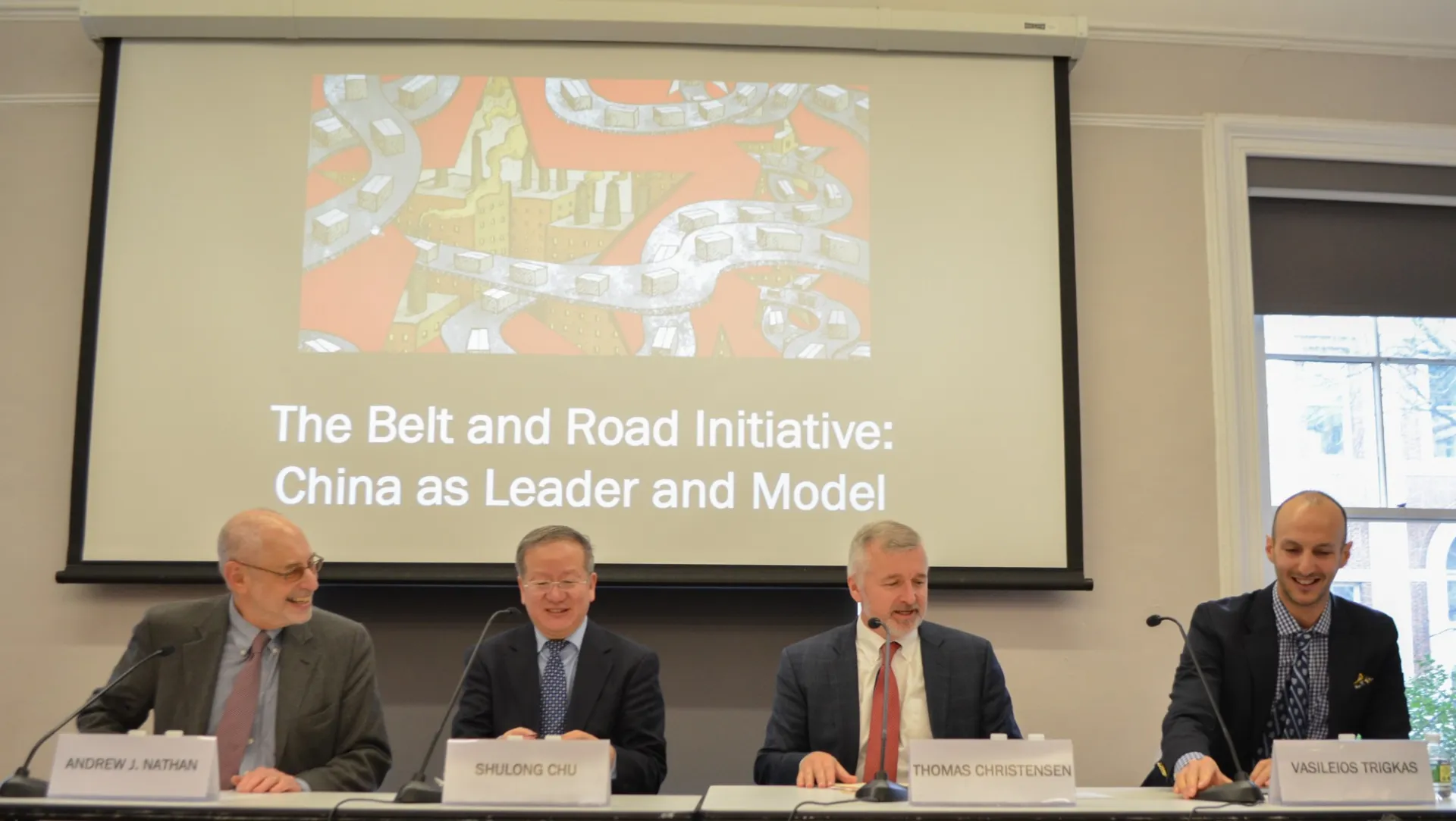
On November 30th, 2018, the European Institute hosted a one day conference "Two Hegemonic Restructuring Projects in Diachronic Perspective: America's Marshall Plan (1948-1951) and China's Belt and Road Initiative (2013-)".
View the full conference and workshop program.
Read brief biographies for the conference and workshop speakers.
The conference was organized by Charles K. Armstrong (The Korea Foundation Professor of Korean Studies in the Social Sciences, Columbia University) and Victoria de Grazia (Moore Collegiate Professor of History, Columbia University). By comparing the Marshall Plan and the Belt and Road Initiative (BRI), the conference sought to offer an analysis of the changing nature of building international influence from the mid-twentieth century to the early twenty-first century.
Read an introduction of the conference by organizers Charles K. Armstrong and Victoria de Grazia.
The conference started with a panel "The Belt and Road Initiative: China as Leader and Model", which debated the different elements of the Belt and Road Initiative and the extent to which China is exercising leadership through the project. The panel (pictured above) featured:
- Thomas Christensen (Columbia University)
- Shulong Chu (Tsinghua University)
- Andrew J. Nathan (Columbia University)
- Vasileios Trigkas (Tsinghua University) - Read Vasileios Trigkas' paper
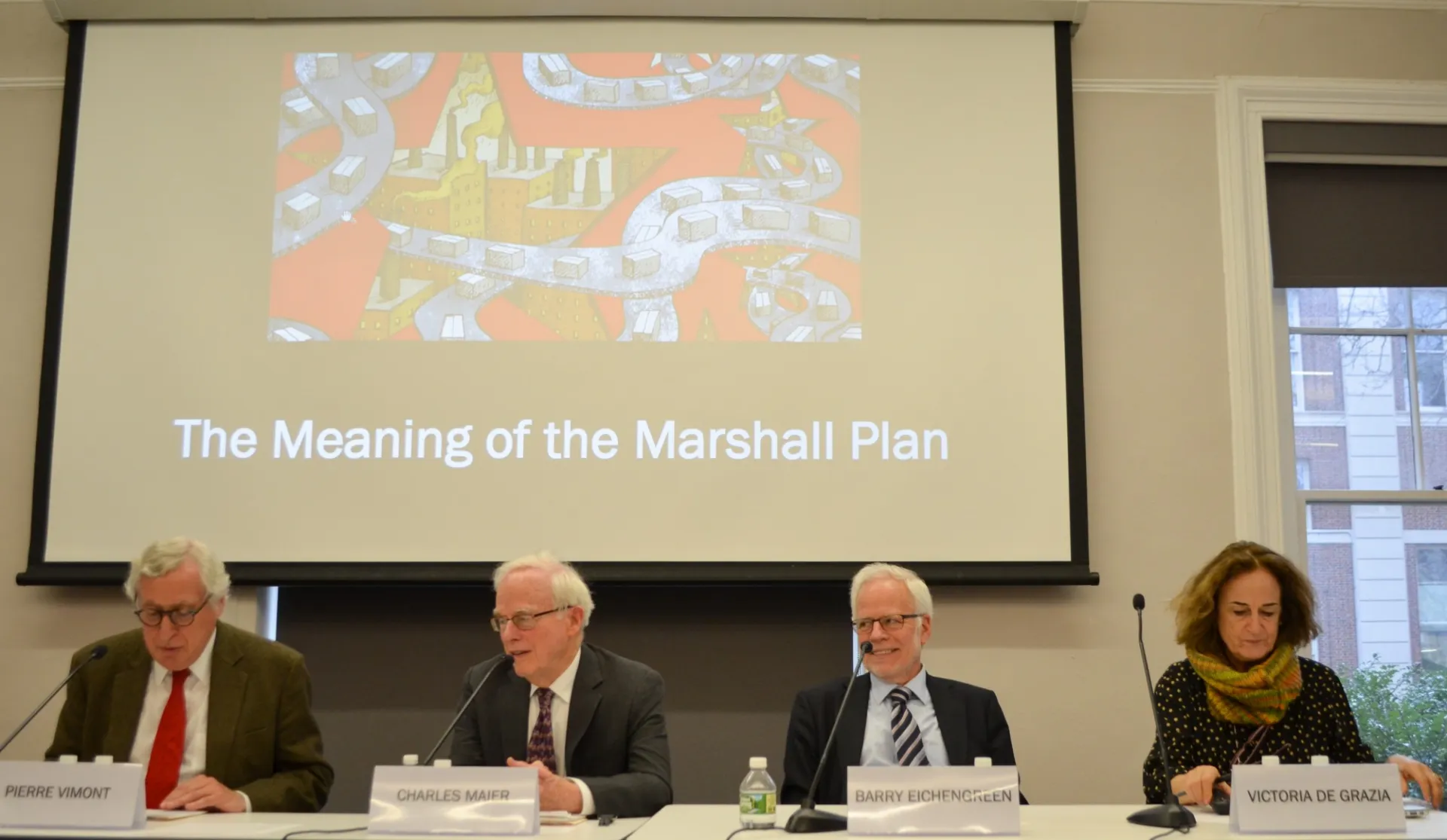
This was followed by "The Meaning of the Marshall Plan", which examined the meaning of the Marshall Plan in its contemporary context and for the European political development during the Cold War. The second panel featured:
- Victoria de Grazia (Columbia University)
- Barry Eichengreen (University of California, Berkeley)
- Charles Maier (Harvard University)
- Pierre Vimont (Columbia University)
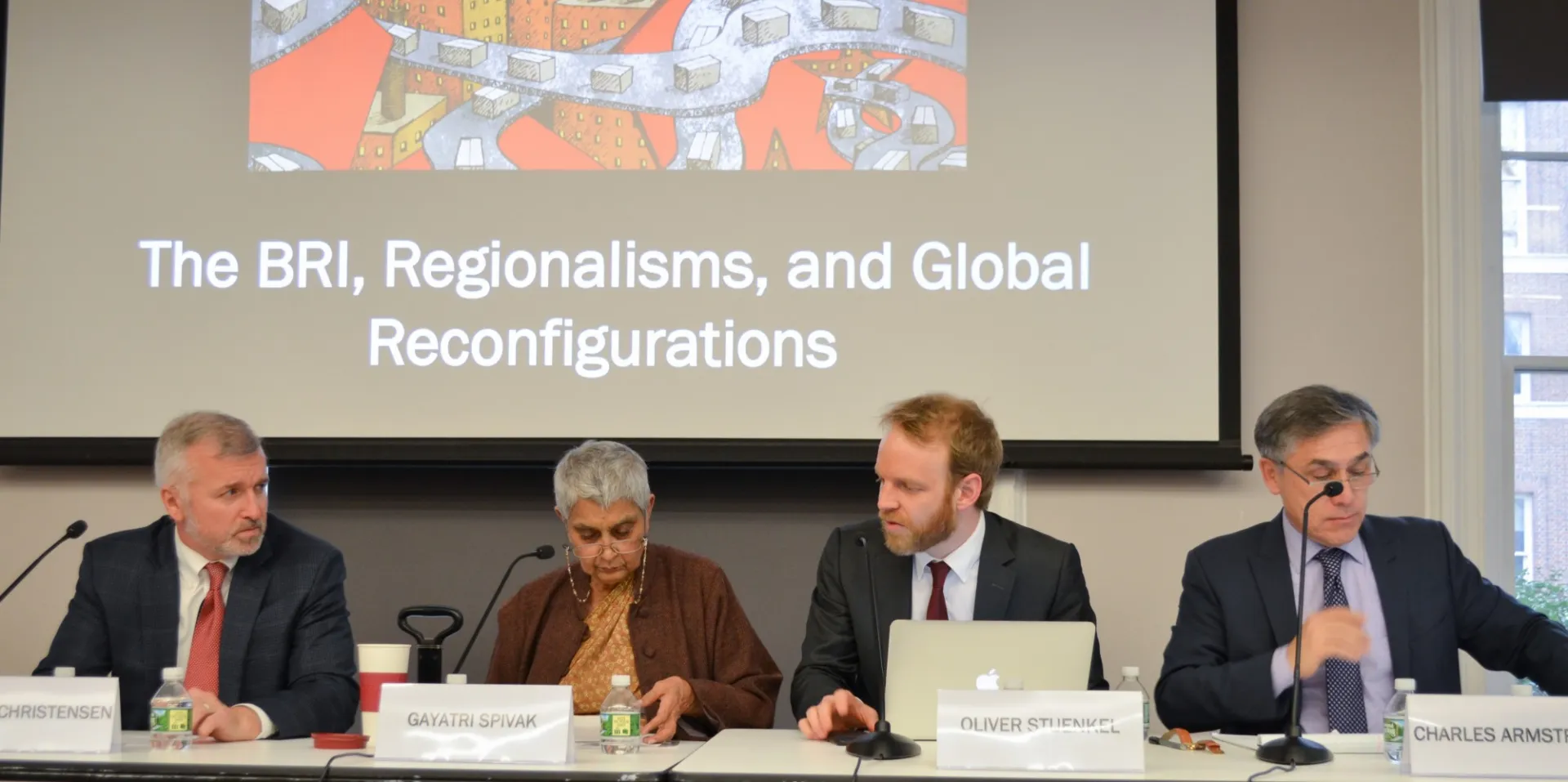
In the afternoon, these two conversations were then positioned in the context of regionalisms and global reconfigurations in the panel "The BRI, Regionalisms, and Global Reconfigurations". The third panel featured:
- Charles K. Armstrong (Columbia University)
- Thomas Christensen (Columbia University)
- Gayatri Spivak (Columbia University)
- Oliver Stuenkel (Getulio Vargas Foundation)
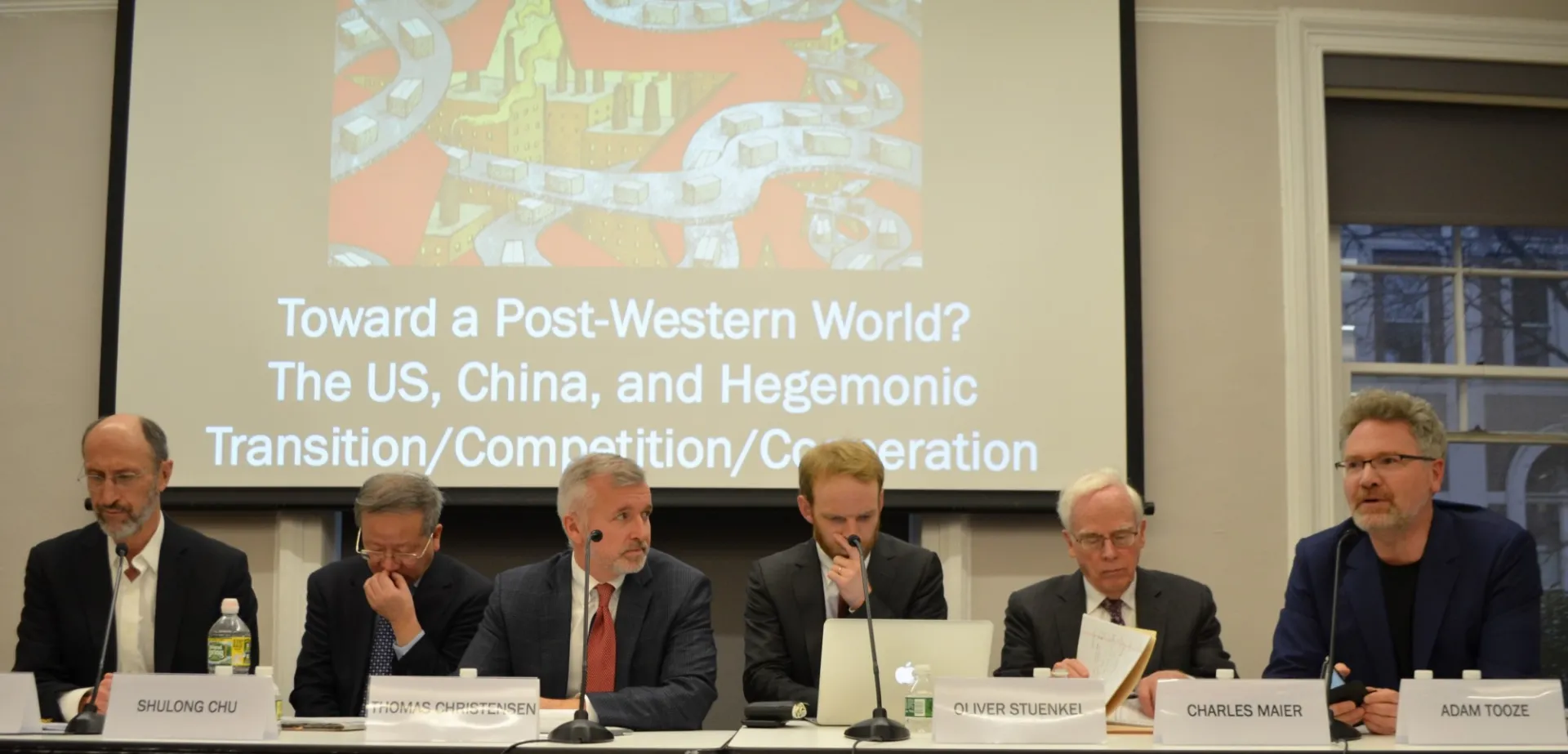
The conference ended with a discussion on the Belt and Road Initiative's significance for the changing 'world order', uncovering different dynamics of transition, competition and cooperation in the US-China relations, in a roundtable "Toward a Post-Western World? The US, China, and Hegemonic Transition/Competition/Cooperation". The roundtable featured:
- Thomas Christensen (Columbia University)
- Shulong Chu (Tsinghua University)
- Charles Maier (Harvard University)
- Jack Snyder (Columbia University)
- Oliver Stuenkel (Getulio Vargas Foundation)
- Adam Tooze (Columbia University)
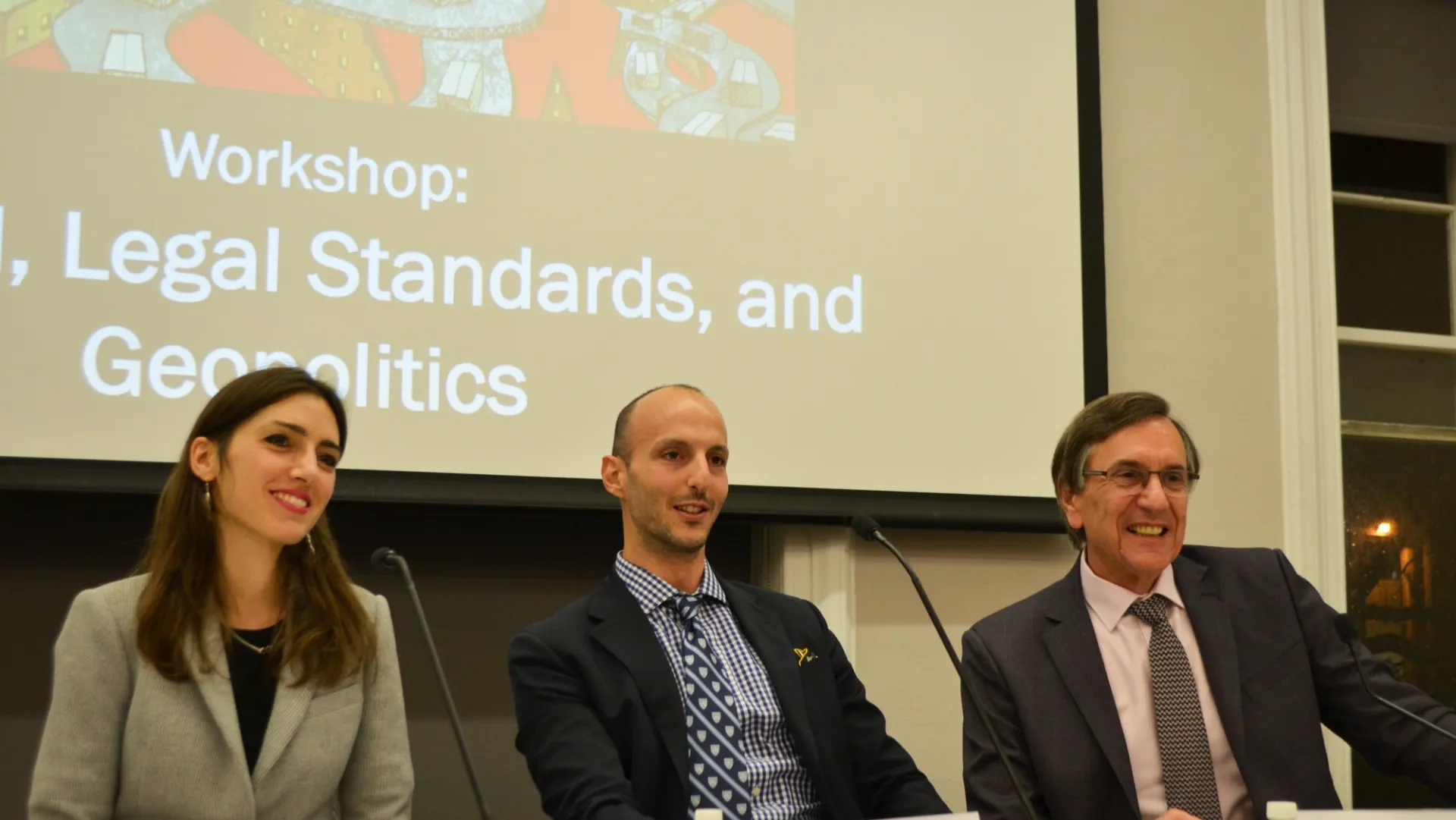
Following the conference, the European Institute hosted a workshop, "The BRI, Legal Standards, and Geopolitics". The workshop featured:
- Maria Adele Carrai (KU Leuven & Harvard University)
- Mark Aronchick (University of Pennsylvania & Tsinghua University)
- Victoria de Grazia (Columbia University)
- Vasileios Trigkas (Tsinghua University)
Click here for more photos from the event: https://flic.kr/s/aHsmx3E8M1
The conference and the workshop were co-sponsored by the European Institute, the Weatherhead East Asian Institute, the Institute for Social and Economic Research and Policy (ISERP), the Department of History, and the Columbia-Harvard China and the World Program.