Recap: "African Soldiers and Italy's Neo-Colonial Policy, 1943-52"
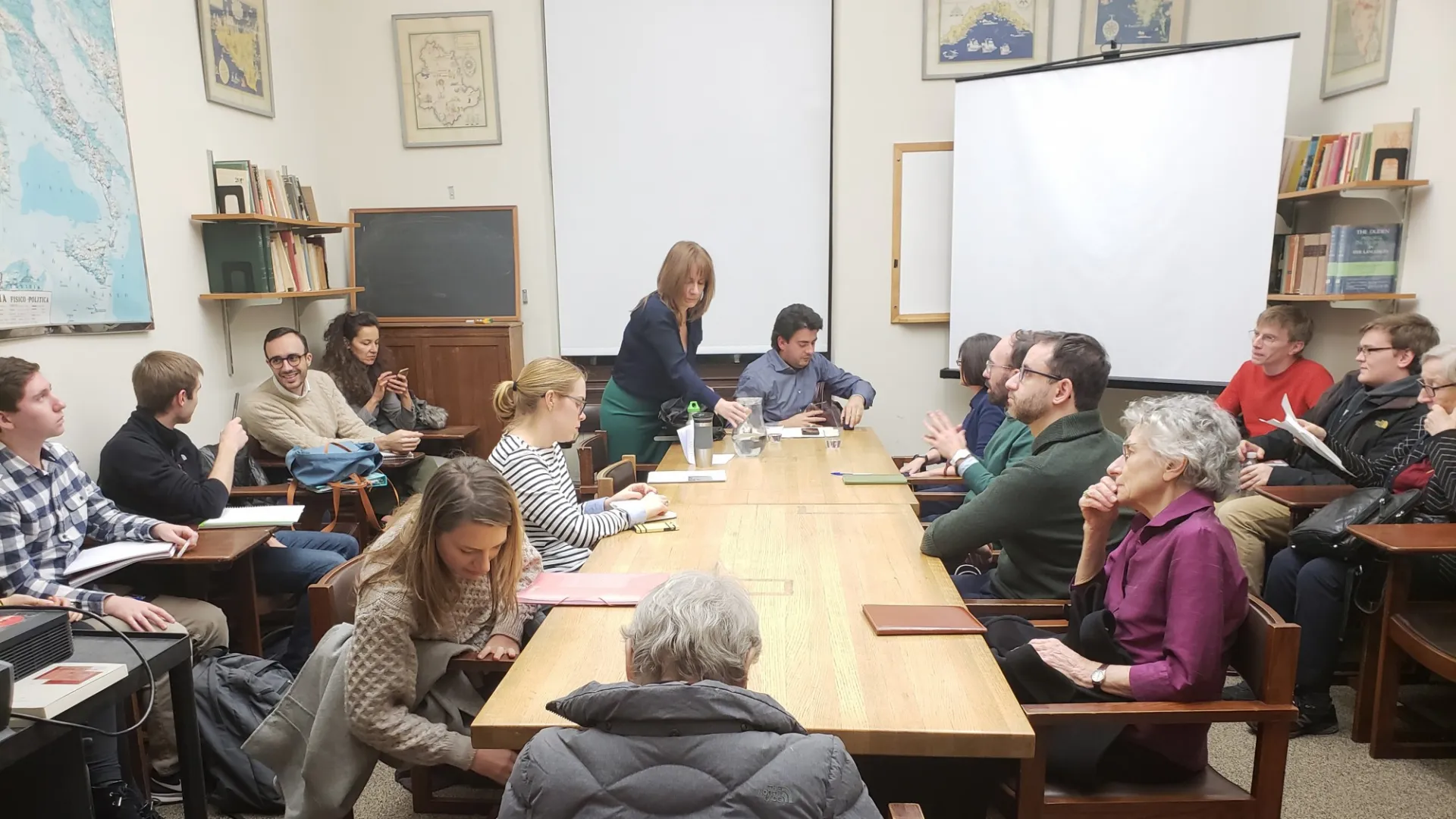
We had another great session of this semester's Italian and Mediterranean Colloquium, thanks to Antonio Morone (Univesrsità degli studi di Pavia, Italy), Silvana Patriarca (Fordham University), and our own Konstantina Zanou. To summarize it briefly, Morone addressed some very pertinent aspects of Italy's colonial past and explained how Italian colonial endeavors through the mid 20th c. still affect Africa and Italy today. Specifically, Morone noted that black natives of Italian colonial holdings in Africa, though many of these individuals fought in in Italy’s name in colonial wars, were not accepted as immigrants into Italy itself.
This rejection of black individuals rightly caused confusion among African people native to Italian colonial holdings, such as Libya and Eritrea, as the rejected typically identified as being Italian themselves. The reason why Africans felt a connection to Italy is because they were taught by the ruling colonial powers that Italy was great place that they should cherish and look up to. On this subject, Morone mentioned some of his own original research interviewing Libyans who lived through the tail end of the era of Italian colonialism; his interviews were illustrative of the fact that Libyans, though they felt that Italy was their "motherland," were not accepted as true members of that motherland by natives of Italy proper.
It was implied at the event that the primary reason why Africans wishing to relocate to Italy after their military service were dismissed as non-Italian is because Italians have historically not been accepting of blackness. Also noted by the experts facilitating the event, is the fact that Italy still demonstrates that it has not rid itself of bias against blackness, as many modern Italians will more readily welcome into their fold a white migrant from Eastern Europe than a black person coming from Italy’s former zones of colonization.
This thread brought up the moral dilemma over whether Italy should feel a more significant sense of responsibility for the mass migrations from their former colonies--thus making a strong connection between history and the present migrant crisis in the Mediterranean. In particular, Morone made the point that movement of populations from Africa to Italy caused by colonial relationships between 1944 and 1945 has created a “migratory chain” that has endured ever since then.
Overall, the event prompted a shift in perspective on the implications of Italian brands of colonialism and neocolonialism for the migration crisis of the present. Perhaps the main question the event left us with was: should Italy be more sympathetic, considering their history of involvement in Africa?
The November 29, 2018 session of the Italian and Mediterranean Colloquium was sponsored by the Department of Italian and the European Institute. More details about the colloquium, along with future events, can be found on the Italian and Mediterranean Colloquium page.